

A complete guide to where Mount Everest is located, its geography and history, the best trekking routes, the ideal seasons to visit, and answers to the most frequently asked questions.
Where Is Mount Everest Located? A Complete Guide for Trekkers and Adventurers
For mountaineers and trekking enthusiasts alike, standing before Mount Everest is a lifelong dream. As the highest peak on Earth, it straddles the Himalayan border between Nepal and the Tibet Autonomous Region of China. Towering at 8,848.86 meters, this legendary summit draws climbers, trekkers, and adventure seekers from every corner of the globe. Whether you’re preparing for the classic Everest Base Camp Trek or simply want to understand where this iconic peak sits on the map, exploring its geography, history, and trekking routes is the ideal starting point.
As a trekking guide and expedition leader with All Himalayan Treks, I still vividly recall my very first approach toward the Everest region — the early morning flight into Lukla, prayer wheels turning quietly in Namche Bazaar, and that unforgettable first sighting of Everest lit up behind Nuptse at dusk. Experiences like these stay etched in a trekker’s memory forever.
Even so, one question keeps coming up from travelers planning their journey: “Where exactly is Mount Everest located?”
This Everest guide breaks down everything you need to know — location, geography, historical background, key facts, and trekking routes — so you can plan your own expedition to the roof of the world with confidence.
Everest’s Location: Country, Geography, and Historical Background
Mount Everest’s summit rests precisely on the international boundary between Nepal and China, deep within the Mahalangur Himal subrange of the greater Himalayan range, at coordinates 27.9881° N, 86.9250° E. Its southern flank lies in Nepal’s Solukhumbu district, while the northern flank falls within Tibet’s Xigaze prefecture — meaning the summit technically belongs to both nations.
| Fact | Detail |
| Height | 8,848.86 metres (29,031.7 feet) |
| Location | Nepal–China border |
| Mountain Range | Himalayas |
| Nepali Name | Sagarmatha |
| Tibetan Name | Chomolungma |
| First Ascent | 1953 |
| First Climbers | Tenzing Norgay Sherpa and Sir Edmund Hillary |
| UNESCO Status | Sagarmatha National Park |
Everest’s official elevation of 8,848.86 meters was jointly confirmed by Nepal and China through a collaborative survey completed in 2020. Encircled by some of the planet’s most formidable peaks, the mountain forms the centerpiece of a breathtaking alpine landscape, rewarding trekkers with panoramic Himalayan vistas at nearly every turn.
The peak lies within Sagarmatha National Park, a protected wilderness area covering 1,148 square kilometers that shelters several other 8,000-meter giants. Thanks to its ecological and cultural significance, the park earned UNESCO World Heritage status in 1979, cementing its role as both a conservation stronghold and a source of immense national pride for Nepal.
A Short History of Everest
Local Nepali communities named the mountain Sagarmatha, combining “Sagar” (sky) and “Matha” (head) — literally “forehead of the sky,” a name reflecting deep reverence for the peak. In Tibet, it’s known as Chomolungma, a name first documented in the 1721 Kangxi Atlas during the rule of Qing Emperor Kangxi. The English name “Everest” came later, proposed by British Surveyor General of India Andrew Waugh in honor of his predecessor, Sir George Everest; before that, the British had simply labeled it Peak XV.
Following many unsuccessful expeditions, the summit was finally conquered in 1953 by Sherpa mountaineer Tenzing Norgay and New Zealand climber Sir Edmund Hillary — a milestone that remains one of mountaineering history’s most celebrated achievements.
The Geography Surrounding Everest
Mount Everest doesn’t stand alone — it anchors a sweeping range of neighboring summits that together define the Himalayas. Ongoing tectonic activity beneath the region continues to push these mountains slightly higher each year, while also reshaping glaciers and carving new terrain, adding an ever-evolving dimension to any trek through the area.
Among the region’s most striking features is the Khumbu Glacier, near Everest Base Camp. Its accompanying Khumbu Icefall is notoriously one of the most hazardous stretches on the entire climbing route, where shifting ice blocks and glacial cracking create constantly changing — and often unpredictable — conditions. Despite the danger, this ever-moving ice adds to the region’s raw, dramatic beauty.
South Side vs. North Side: Nepal or Tibet?
Since Everest sits directly on the Nepal–China frontier, neither country claims the mountain outright. The southern face belongs to Nepal, while the northern face lies within Tibetan territory.
| Feature | South Route (Nepal) | North Route (China/Tibet) |
| Starting Point | Lukla | Lhasa |
| Popularity | Higher | Lower, less crowded |
| Trekking Experience | Scenic trails through Sherpa villages | Vehicle access to Base Camp with sweeping views |
| Main Draw | Everest Base Camp Trek | Panoramic views of the north face |
| Cultural Flavor | Sherpa traditions and Buddhist monasteries | Tibetan culture and Chomolungma heritage |
| Accessibility | More trekker-friendly | Tighter permit restrictions |
| Ideal For | Trekking and cultural immersion | Road-based travel and quieter exploration |
Most trekkers gravitate toward the southern approach, thanks to its well-established trails, stunning scenery, and immersive Sherpa culture. The journey typically begins with a flight into Lukla — an adventure in its own right, given the airport’s steep mountainside approach and famously sharp runway, which has earned it a reputation as one of the world’s most challenging airstrips to land at.
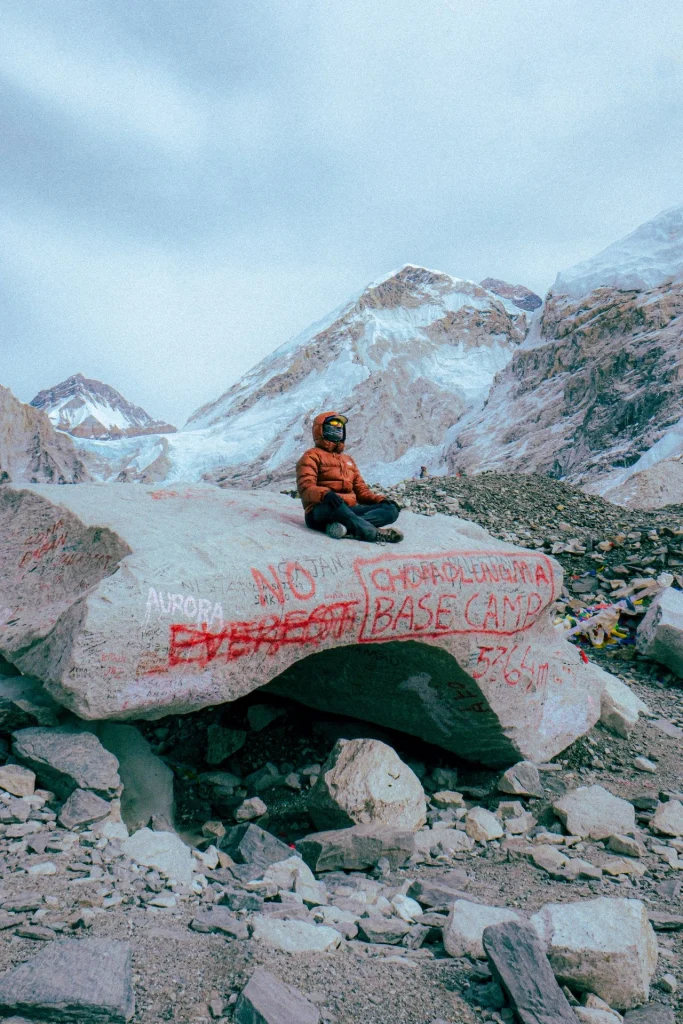
From Lukla, the trail winds through Phakding, Namche Bazaar, Tengboche Monastery, and Gorakshep before reaching Everest Base Camp at roughly 5,545 meters. Along the way, trekkers pass through Sherpa villages rich in culture, encountering historic monasteries and authentic mountain cuisine at every stop.
The southern route also runs through Sagarmatha National Park, offering a rare glimpse into Himalayan biodiversity — keep an eye out for red pandas, snow leopards, and Himalayan black bears along the trail.
Trekking the Northern Route Through Tibet
On the Tibetan side, Everest lies within the Chomolungma Nature Reserve, and the northern trekking route begins in Lhasa. From there, an overland journey across the Tibetan Plateau leads to the mountain’s north face, where travelers can take in the full scale of the peak from an elevation of about 5,200 meters. For Tibetans, Chomolungma holds deep spiritual significance as the revered “Goddess Mother of Mountains.” That said, this route generally involves higher costs and more complex permit requirements than the Nepal side, which is one reason the southern approach remains the more popular — and more affordable — choice among trekkers.
How to Reach Mount Everest
- Flight to Lukla: After landing in Kathmandu, most trekkers catch a short domestic flight to Tenzing-Hillary Airport in Lukla — the primary gateway into the Everest region. The flight takes roughly 30 to 40 minutes and treats passengers to spectacular aerial views of the Himalayan range. Keep in mind that Lukla flights are highly weather-dependent, and delays are common, particularly during monsoon season.
- Trekking Route to Everest Base Camp: The classic Everest Base Camp Trek follows this well-trodden itinerary:
- Lukla
- Phakding
- Namche Bazaar
- Tengboche
- Dingboche
- Lobuche
- Gorakshep
- Everest Base Camp
- Kala Patthar
Depending on your pace and acclimatization schedule, the full Everest Base Camp Trek generally takes between 12 and 14 days to complete.
Why Is Mount Everest So Famous?
Mount Everest’s fame spans the globe, rooted in its staggering height, rich Himalayan heritage, demanding climbing expeditions, and profound spiritual significance. As the highest mountain on the planet, the Everest summit continually draws mountaineers, trekkers, photographers, and spiritual seekers from every continent.
Standing atop Everest is widely regarded as a once-in-a-lifetime achievement, given the extreme altitude and notoriously unpredictable mountain weather. Yet beyond the challenge, the peak is cherished as a precious natural treasure. The surrounding Everest region is home to the renowned Sherpa community, whose deep-rooted culture and generations of high-altitude knowledge are woven into the very identity of the Himalayas. For local communities on both sides of the border, Everest also carries deep spiritual meaning — a factor that draws countless trekkers and travelers into the region each year.
A trip to Everest is far more than a mountain expedition — it’s an immersive journey through dramatic Himalayan scenery and vibrant Sherpa traditions. Whether your goal is trekking to Everest Base Camp or simply soaking in the grandeur of the Himalayas, an Everest adventure delivers memories that stay with you for a lifetime.
Popular Trekking Routes to Everest
Everest Base Camp Trek
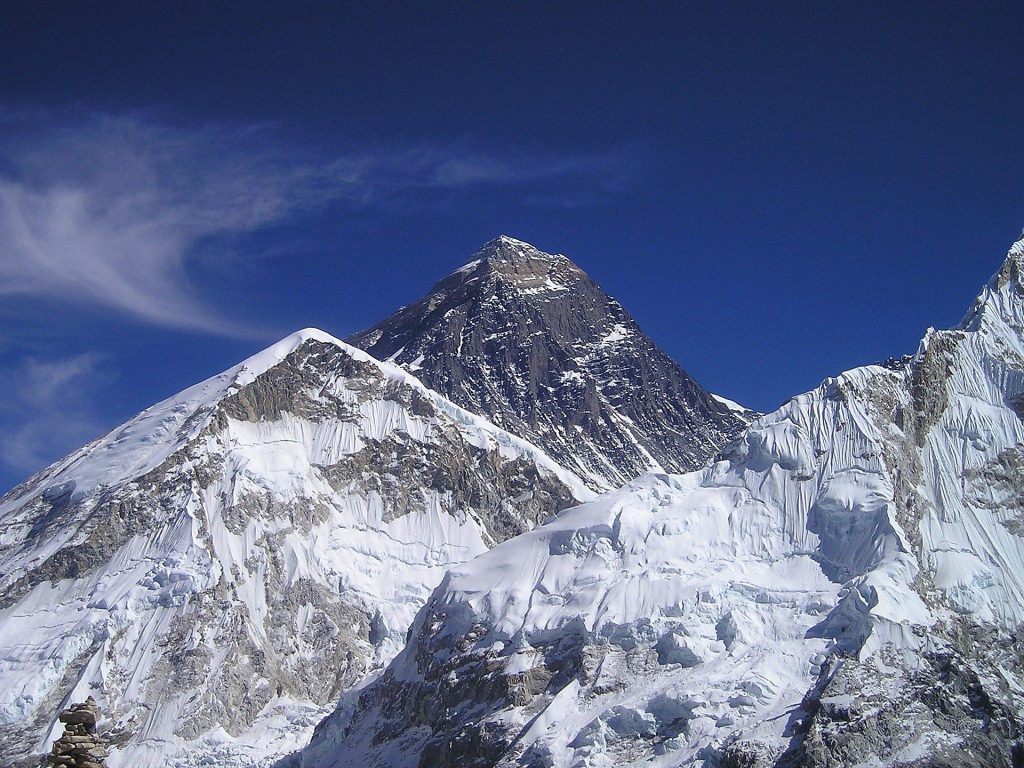
The Everest Base Camp Trek stands out as the most sought-after route for exploring the depths of the Himalayan range. Spanning 13 days, the journey sets off from Phakding and winds through the lively town of Namche Bazaar before reaching the spiritually significant Tengboche Monastery. From there, trekkers continue on to Gorakshep, passing near the dramatic Khumbu Icefall, before reaching the trek’s final highlight — Kala Patthar, standing at 5,545 meters — where an awe-inspiring panorama of Everest and its neighboring peaks awaits.
Everest Three Passes Trek
For seasoned, physically fit trekkers seeking a serious challenge, the Everest Three Passes Trek delivers one of the most demanding — and rewarding — adventures in the region. This 17-day expedition crosses three formidable high-altitude passes: Renjo La (5,360m), Cho La (5,420m), and Kongma La (5,535m). Like the classic Base Camp route, it begins with a flight into Lukla and follows much of the same trail, with the added thrill of navigating all three mountain passes along the way.
Gokyo Valley Trek
The Gokyo Valley Trek runs for 14 days and shares portions of its trail with the Everest Base Camp route, though it offers an equally rewarding — and comparably challenging — experience. Highlights include the stunning turquoise Gokyo Lakes, a crossing of Cho La Pass, and sweeping views of the Khumbu Glacier.
Everest View Trek
For travelers with limited time or those seeking a gentler introduction to the Himalayas, the Everest View Trek is an excellent alternative to the more strenuous Gokyo Valley and Three Passes routes. This 7-day trek allows extra time to soak in the culture of Namche Bazaar and includes a visit to Tengboche Monastery, famous for its sweeping views of the surrounding mountain peaks.
Best Time to Visit Everest
Weather conditions in the high Himalayas can shift quickly and unpredictably. Trekking during the wrong season doesn’t just risk spoiling your journey — it can also increase the danger of altitude sickness and other health complications. Fortunately, two peak trekking seasons offer the most rewarding conditions for visiting the region.
- Spring Season (March to May): Widely regarded as the finest time to trek in the Everest region, spring brings gradually warming temperatures, vibrant pink and red rhododendron blooms along the lower trails, and increasingly clear skies that showcase the mountains at their best.
- Autumn Season (September to November): Autumn is another excellent window for an Everest trek. With the monsoon rains having cleared dust and haze from the atmosphere, the Himalayan skies turn remarkably crisp and clear. While temperatures run cooler than in spring, this season offers the highest likelihood of unobstructed views of Mount Everest.
Conclusion
Mount Everest is far more than just the world’s tallest peak. Rising along the Nepal–Tibet border at the heart of the Himalayas, it embodies adventure, culture, and awe-inspiring natural beauty — a true wonder of the natural world. From the colorful Sherpa villages scattered throughout the Khumbu region to the vast glaciers surrounding Everest Base Camp, every stage of the journey offers something unforgettable.
Whether you’re planning a trek to Everest Base Camp, hoping to explore Sagarmatha National Park, or simply curious about the mountain’s geography and history, Everest remains one of Earth’s most extraordinary natural marvels. With the right preparation, careful timing, and a spirit of adventure, a journey into the Everest region can become a story you’ll carry — and tell — for years to come.
FAQs About Mount Everest
1) Which country is Mount Everest in?
Mount Everest sits within the Himalayan range on the border between Nepal and China, specifically between Nepal and the Tibet Autonomous Region. It holds the title of the highest mountain on Earth.
2) Is Mount Everest completely in Nepal?
No. While much of the mountain and its popular trekking routes lie in Nepal, the northern section of Everest belongs to Tibet, as the summit rests directly on the international border.
3) Is Mount Everest in Nepal or in China?
Technically, it’s in both. The summit sits precisely on the border between Nepal and the Tibet Autonomous Region of China — the southern slope belongs to Nepal, and the northern slope to China.
4) Which side of Mount Everest is easier to trek?
The southern (Nepal) side is generally considered more accessible, thanks to well-developed trekking infrastructure, a simpler permit process, and scenic, well-marked trails leading to Everest Base Camp.
5) What is the best season to visit Everest?
The ideal times to trek in the Everest region are spring (March to May) and autumn (September to November), both known for stable weather and clear mountain views.
6) Is the Everest Base Camp trek difficult?
Yes, it’s considered a moderately difficult trek. No technical climbing skills are required, but trekkers should expect several hours of walking daily at increasingly high altitude.
7) Do you need a permit to trek to Everest?
Yes. Trekkers heading to Everest Base Camp in Nepal need two main permits: the Sagarmatha National Park Entry Permit and the Khumbu Pasang Lhamu Rural Municipality Permit.
8) Is trekking through Nepal or Tibet more expensive for Everest Base Camp?
The Tibetan (northern) route tends to be pricier due to stricter regulations and additional permit requirements. Trekking through Nepal is generally more affordable and offers greater flexibility.
9) What is Mount Everest called in Nepali and Tibetan?
In Nepali, it’s known as Sagarmatha, meaning “head in the sky.” In Tibetan, it’s called Chomolungma (or Qomolangma), translating to “Goddess Mother of the World.”