
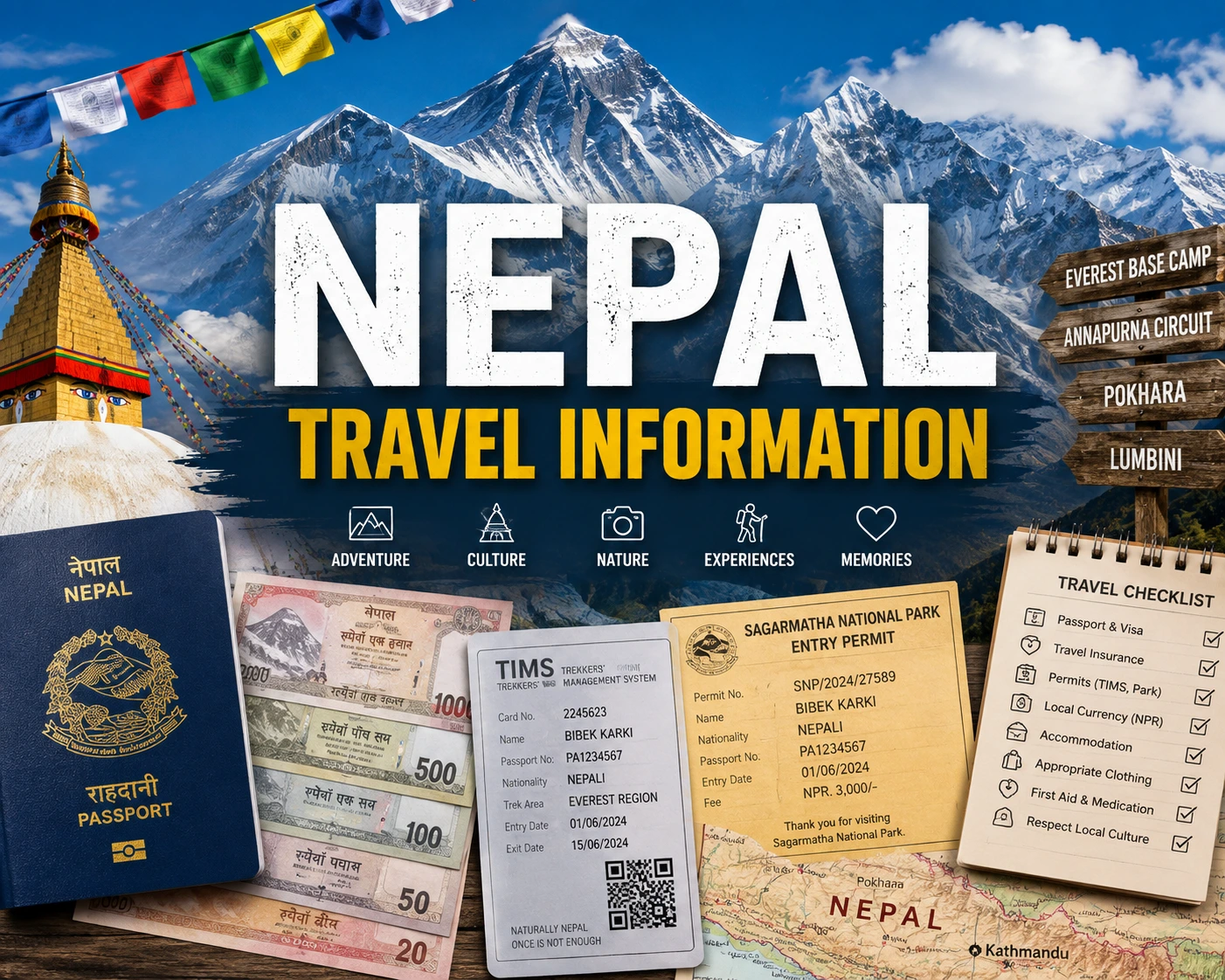
Planning a trip to Nepal? Here is everything you need to know before you travel — from visas and permits to weather, packing, and safety. This guide will help you prepare for a smooth and enjoyable journey across the Himalayas.
Visa Information
Most travelers can obtain a visa on arrival at Tribhuvan International Airport, Kathmandu, or at land border crossings.
Visa Fees (Multiple Entry):
- 15 days – USD $30
- 30 days – USD $50
- 90 days – USD $125
Documents Required:
- Passport valid for at least 6 months
- One passport-sized photo
- Visa fee in cash (USD preferred)
You can also apply for an online visa in advance through Nepal’s official immigration website to save time at the airport.
Best Time to Visit Nepal
Nepal can be visited year-round, but the best seasons for trekking are:
- Spring (March–May): Clear skies, blooming rhododendrons, warm days, and cool nights. Ideal for Everest and Annapurna region treks.
- Autumn (September–November): The most popular season. Stable weather, excellent mountain views, and comfortable temperatures.
- Winter (December–February): Good for lower-altitude treks. Higher passes may be closed due to snow.
- Summer/Monsoon (June–August): Rainy in most regions, but good for rain-shadow areas like Upper Mustang and Tibet.
Currency & Money
- The local currency is the Nepali Rupee (NPR).
- ATMs and currency exchange counters are widely available in Kathmandu and Thamel.
- In remote trekking regions, including areas around Ramechhap and Solukhumbu, ATMs are limited. Carry sufficient cash before starting your trek.
- Major hotels and shops in the city accept cards, but teahouses on trekking routes usually require cash.
Permits & Documentation
Depending on your trekking route, you may need the following:
- TIMS Card (Trekkers’ Information Management System)
- National Park Entry Permit (e.g., Sagarmatha National Park, Annapurna Conservation Area)
- Restricted Area Permit (required for regions like Upper Mustang, Kanchenjunga, and Manaslu)
Our team can help arrange all necessary permits as part of your trek package.
Health & Safety
- Travel Insurance: Required for all trekking and climbing trips. Make sure your policy covers high-altitude trekking and emergency helicopter evacuation.
- Altitude Sickness: Take your trek slowly, stay hydrated, and follow your guide’s advice on acclimatization days.
- Vaccinations: Routine vaccines are recommended. Consult your doctor before traveling.
- Medical Facilities: Available in Kathmandu and major towns. Limited facilities in remote trekking areas, so proper preparation is essential.
Getting To and Around Nepal
International Flights: Tribhuvan International Airport (Kathmandu) is Nepal’s main entry point, with connections from major cities across Asia, the Middle East, and beyond.
Domestic Flights: Popular routes include Kathmandu–Lukla and Ramechhap–Lukla (used during the peak trekking season for Everest region flights).
Ground Transportation: For travelers heading toward the Everest region, road transport between Kathmandu and Ramechhap, or Kathmandu and Salleri, is a reliable and affordable alternative to domestic flights. We offer private and shared transportation services to make this journey comfortable and hassle-free.
→ Kathmandu to Ramechhap Transportation Services
→ Kathmandu to Salleri (Surke) Transportation Services
Packing Guide
Essentials for trekking in Nepal:
- Sturdy, broken-in trekking boots
- Layered clothing (thermal wear, fleece, waterproof jacket)
- Warm hat, gloves, and sunglasses
- Sleeping bag (rated for cold temperatures)
- Trekking poles
- First-aid kit and personal medications
- Reusable water bottle and water purification tablets
- Power bank and universal adapter
Packing needs vary depending on the season and altitude of your trek. Our guides can provide a detailed checklist based on your specific trip.
Culture & Etiquette
- Dress modestly, especially when visiting temples and monasteries.
- Always walk clockwise around Buddhist stupas and mani walls.
- Remove shoes before entering someone’s home or a temple.
- Ask for permission before photographing local people.
- Tipping guides and porters is customary and appreciated, though not mandatory.
Communication & Connectivity
- Local SIM cards (Ncell and NTC) are available at the airport and in Kathmandu, offering affordable data and call packages.
- Wi-Fi is available in most teahouses along popular trekking routes, though speeds may be slow at higher altitudes.
- Carrying a power bank is recommended, as electricity may be limited or charged per use in remote areas.
Frequently Asked Questions
Do I need a guide to trek in Nepal?
While independent trekking is possible on some routes, a licensed guide is required for restricted areas and highly recommended for safety, especially at high altitudes.
Is Nepal safe for solo travelers?
Yes, Nepal is generally safe for solo and independent travelers. Basic precautions and proper trip planning are recommended.
What language is spoken in Nepal?
Nepali is the official language, though English is widely spoken in tourist areas and by trekking guides.
Do I need travel insurance?
Yes, travel insurance covering high-altitude trekking and emergency evacuation is required for all our trekking and climbing packages.