
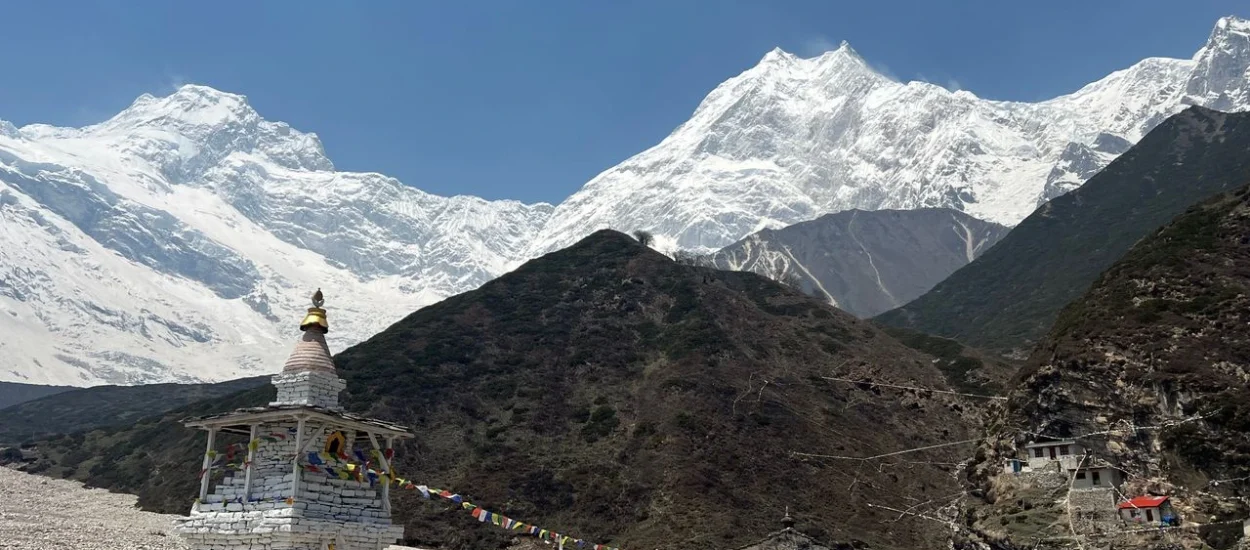
The Manaslu Circuit Trek – 17 Days stands out as one of Nepal’s finest off-the-beaten-path adventures, prized for its raw natural beauty and untouched mountain scenery.
This journey immerses trekkers in the customs and traditions of both Hindu and Buddhist communities, offering genuine warmth and hospitality from local villagers along the way. Throughout the route, hikers are treated to sweeping views of Nepal’s iconic Himalayan summits, including Mount Manaslu, Lamjung Himal, Annapurna II, and several other snow-capped peaks.
A true highlight of the adventure is the climb to Larkya La Pass, rewarding trekkers with unforgettable, sweeping mountain vistas. The trail winds through varied forest belts where sightings of native wildlife and bird species are common.
While acclimatizing in Samagaun, trekkers have the option to add side hikes to Manaslu Base Camp or the historic Pungen Monastery. The entire route delivers jaw-dropping scenery at every turn, making it an ideal choice for adventure seekers craving a genuine Himalayan challenge.
Because the Manaslu region sees far fewer visitors than more mainstream trekking circuits like Everest trek or Annapurna trek, the trail offers a rare sense of solitude and freedom to explore at your own pace. Rolling green meadows and high-altitude pastures further enhance the trek’s natural charm.
The adventure kicks off with a scenic drive to Soti Khola/Machha Khola via Arughat Bazaar, after which the on-foot trekking begins from Soti Khola toward Machha Khola. The following day’s trail leads to Doban, and from there, scenic walking paths climb toward Philim.
Beyond Philim, the route continues to Deng before climbing further to Ghap, taking trekkers deeper into the remote Manaslu region. The trail then proceeds toward Namrung — and as elevation increases, mountain views grow more spectacular while the terrain becomes noticeably more rugged and demanding.
Past Namrung, the trail crosses the 3,000-meter mark en route to Lho, then continues on to Samagaun, where trekkers spend a full day acclimatizing and resting. From Samagaun, the path pushes on toward Dharamsala.
The final push involves descending from Larkya La Pass — the trek’s highest and most dramatic point — down to Bhimtang. From there, the trail descends further to Dharapani via Gho, before a scenic drive back to Kathmandu through Besisahar wraps up the expedition.
Day 01: Arrival in Kathmandu (1,350 m/4,429 ft)
Day 02: Drive from Kathmandu to Soti Khola (700 m/2,297 ft) — 8 hrs
Day 03: Trek from Soti Khola to Maccha Khola (930 m/3,051 ft) — 6 hrs
Day 04: Trek from Maccha Khola to Jagat (1,340 m/4,396 ft) — 7 hrs
Day 05: Trek from Jagat to Deng (1,804 m/5,918 ft) — 7 hrs
Day 06: Trek from Pewa to Namrung (2,630 m/8,628 ft) — 6 hrs
Day 07: Trek from Namrung to Lho (2,957 m/9,701 ft) — 4 hrs
Day 08: Trek from Lho to Sama Gaun (3,530 m/11,581 ft) — 4 hrs
Day 09: Acclimatization day in Sama Gaun
Day 10: Trek from Sama Gaun to Samdo (3,865 m/12,680 ft) — 3 hrs
Day 11: Acclimatization day in Samdo
Day 12: Trek from Samdo to Dharamsala (4,460 m/14,632 ft) — 4 hrs
Day 13: Trek from Dharamsala to Bimthang via Larkya La Pass (5,160 m/16,929 ft) — 10 hrs
Day 14: Trek from Bimthang to Dharapani (1,970 m/6,463 ft) — 7 hrs
Day 15: Drive back to Kathmandu (1,350 m/4,429 ft) — 10 hrs
Day 16: Sightseeing in Kathmandu
Day 17: Final departure
Autumn (September–November) and spring (March–May) stand out as the prime trekking seasons for the Manaslu Circuit, offering the most favorable weather and trail conditions in the region.
Autumn typically brings stable, clear skies with comfortable daytime temperatures and excellent mountain visibility. Crisp air and vivid fall foliage across the surrounding hills and forests add extra charm to the trekking route during this season.
Spring paints the trail in color as rhododendron forests burst into bloom, creating a spectacular backdrop for trekkers. Mild temperatures and longer daylight hours during this season make for a more relaxed and enjoyable hiking experience.
Both seasons offer pleasant daytime trekking conditions paired with cool, comfortable nights for sleeping. That said, mountain weather can shift quickly and unpredictably, so it’s wise to monitor forecasts closely and stay prepared for sudden changes in conditions.
The Manaslu Circuit is classified as a challenging, high-altitude trek that demands solid physical fitness and stamina.
The route covers varied terrain, including rocky trails and steep uphill and downhill stretches, with daily trekking hours typically ranging from six to eight. Trekkers should be mentally and physically prepared for consistently long walking days.
High altitude presents one of the trek’s biggest challenges. The journey peaks at Larkya La Pass, sitting at an elevation of 5,160 meters — the highest point of the entire route.
Proper acclimatization and a gradual ascent pace are essential to minimize the risk of altitude sickness, a common concern on high-altitude Himalayan treks like this one.
Trekkers should also be prepared to cross suspension bridges and navigate uneven, rocky trail sections, along with the possibility of shifting weather patterns — from cold temperatures and strong winds to occasional rain or snowfall.
Despite these demands, the Manaslu Circuit rewards trekkers with awe-inspiring mountain scenery, peaceful natural surroundings, and meaningful cultural encounters with local mountain communities.
A safe and rewarding trekking experience ultimately comes down to solid preparation — including physical conditioning, proper acclimatization, and packing the right trekking gear for high-altitude conditions.
On landing at Tribhuvan International Airport, you’ll be met and transferred to your hotel in the bustling Thamel neighborhood. Take some time to wander this vibrant tourist hub, packed with gear shops, cozy cafés, and lively restaurants.
Feel free to sample authentic Nepali cuisine at local eateries for lunch and dinner. Afterward, head back to your hotel to rest up before the adventure begins.
Following breakfast, set off on a scenic drive along the Prithvi Highway, a journey of roughly eight hours. Along the way, you’ll pass traditional Nepali hamlets and lush, terraced farmland.
Midway, you’ll pass through Malekhu, a riverside town famous for its delicious fish dishes. The route also treats you to views of the cascading Trishuli River and early glimpses of the Ganesh Himal range.
This marks the official start of your trekking journey, following the Budi Gandaki River through verdant forest cover and terraced rice paddies that showcase the region’s rural charm.
The trail crosses several suspension bridges and passes small settlements, including Khursane village. Cascading waterfalls tumbling from nearby cliffs make this stretch especially scenic.
The route continues alongside the river and climbs through a stretch of uphill trail, weaving through thick forest and rural villages. A highlight is Tatopani, where trekkers can soak in natural hot springs.
As you near Jagat, the river gorge deepens and the surrounding cliffs grow more dramatic, adding to the trail’s rugged appeal.
Today’s walk showcases the region’s natural beauty, passing terraced fields and pine forest. The trail leads through the culturally significant village of Philim, offering insight into traditional local customs.
As the trail climbs, increasingly striking views of the Manaslu range unfold at every turn. After roughly seven hours of trekking, you’ll arrive in Deng for an overnight stay.
The trail climbs steadily toward Namrung, passing through dense, vegetation-rich forest and crossing small mountain streams along the way.
Namrung offers an authentic taste of local village life along with fine mountain views — a great spot to pause and take it all in before settling into a teahouse for the night.
The path follows the river through thick woodland before reaching a narrow gorge, and one final steep climb brings you into Namrung village.
Today’s stage to Lho is comparatively shorter but no less scenic, offering fine views of the Manaslu Himal range throughout the walk.
Lho is known for its warm community spirit and historic monasteries, giving trekkers a genuine taste of Tibetan-influenced culture. Despite the shorter distance, the steady uphill climb makes for a tiring day, so plan on a restful overnight stay.
The trail leads to Sama Gaun, a picturesque village that serves as the gateway to Manaslu Base Camp. Towering cliffs and mountain backdrops make this stretch particularly rewarding.
Along the way, you’ll pass through Shyala, known for offering some of the best panoramic views of Himalchuli, Peak 29, and Manaslu itself. Once in Sama Gaun, take time to explore the village, meet its ethnically diverse residents, and visit nearby monasteries.
A full rest day in Sama Gaun allows your body to adjust to the thinning air and rising altitude. Optional short hikes to nearby viewpoints reward trekkers with fantastic views of Manaslu and neighboring peaks.
A visit to Birendra Lake in the morning is a popular option, followed by an afternoon exploring the village and connecting with the local community.
This relatively short, three-hour stage crosses open fields with sweeping views of the Larkya Glacier and surrounding peaks.
Samdo is one of the last inhabited settlements before the Tibetan border, giving trekkers a strong sense of Tibetan culture and tradition among its residents.
A second acclimatization day helps prepare the body for the demanding high-altitude stages ahead. An optional hike to nearby hills offers superb views of the Manaslu massif.
This is also a great opportunity to interact with local villagers and learn more about their traditions and daily lifestyle.
Today’s trek leads to Dharamsala, the launching point for the crossing of Larkya La Pass (5,160 m). The trail alternates between gradual and steep sections, crossing rugged high-altitude terrain that reveals the quiet, remote character of the mountains.
Once in Dharamsala, rest and prepare for the demanding pass crossing ahead.
This is the most challenging and rewarding stage of the entire trek. You’ll ascend to Larkya La Pass, the trek’s highest point, where sweeping views of peaks like Cho Danda and Larkya Peak await.
After crossing the pass, the trail descends toward Bimthang, flanked by glaciers on one side and alpine meadows on the other, eventually reaching the scenic village of Bimthang.
The descent from Bimthang to Dharapani passes through dense forest and charming villages. As elevation drops, the landscape shifts dramatically, highlighting the region’s remarkable diversity.
The trail follows the riverbank down to Dharapani, which also marks the starting point of the Annapurna region. Dharapani offers noticeably better facilities than earlier stops, and you’ll overnight in a teahouse here after a demanding seven-hour trekking day.
Your trek concludes with a return drive to Kathmandu along the Prithvi Highway. The roughly ten-hour journey offers plenty of time to reflect on the trekking adventure you’ve just completed.
Upon arrival in Kathmandu, check into your hotel and take some time to rest and recover.
Spend the day exploring Kathmandu’s rich cultural heritage. Key sites include Swayambhunath (the Monkey Temple), the sacred Boudhanath Stupa, and Pashupatinath Temple, one of the largest Hindu temple complexes in South Asia. Each site offers a unique window into Nepal’s religious and cultural traditions.
After a full day of sightseeing, you’ll be dropped back at your hotel. Spend the evening exploring Thamel’s cafés, bars, and shops.
On your last day, enjoy some final shopping or sightseeing before heading to the airport for departure. Take with you lasting memories of the valleys, villages, and majestic Himalayan views from your Manaslu adventure.
As we bid farewell on this final day, you’ll be transferred to Tribhuvan International Airport with a short send-off. We hope to welcome you back for future adventures in Nepal — until then, safe travels and thank you for trekking with us.
Yes, most teahouses and lodges along the trekking route offer internet access. That said, some establishments charge an hourly fee, and connection speeds throughout this remote Himalayan region tend to be quite slow.
Before setting off on the Manaslu Circuit, trekkers must obtain a few essential permits: the Manaslu Restricted Area Permit (RAP) and the Manaslu Conservation Area Project (MCAP) permit. Your trekking agency can typically handle the paperwork and arrange these permits on your behalf.
Teahouses and mountain lodges serve as the main form of accommodation throughout the trek. Most offer basic twin-share rooms with shared bathroom facilities. Hot showers are usually available, though often for a small additional charge.
The Manaslu Circuit ranks among Nepal’s more demanding trekking routes. Trails here are far less developed than on popular circuits, winding through steep hillsides and remote mountain villages. High elevation increases the risk of altitude sickness, making physical fitness and stamina especially important for this Himalayan journey.
The trek is most rewarding during autumn (September to November) and spring (March to May), when trail conditions and mountain visibility are at their best. Winter snowfall and monsoon rains can severely disrupt trail and road conditions, making trekking considerably more difficult during those months.
Yes, porter support is included throughout the trek. Typically, one porter is assigned to carry the bags of two trekkers. While porters are generally capable of carrying up to 20 kg total, trekkers are advised to limit their load to around 10 kg per person for comfort and safety.


With 10+ years of expertise in Nepal, Tibet, and Bhutan, Binaya is the right person to help you create a trip you’ll never forget.