
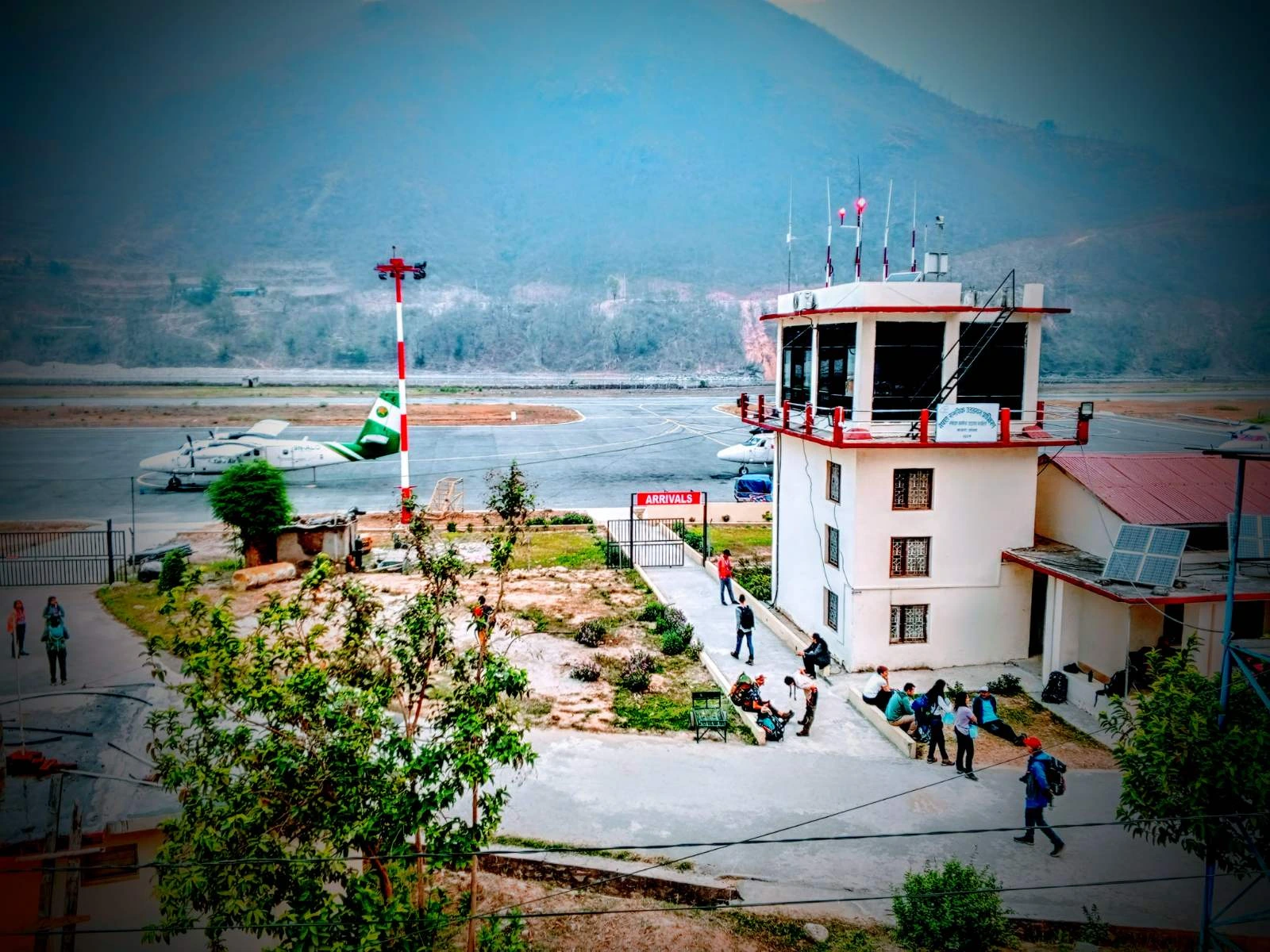
Planning a trek to Everest Base Camp or the Solukhumbu region during peak season? Chances are your Lukla flight won’t depart from Kathmandu at all — it will leave from Ramechhap Airport (Manthali Airport), a small domestic airstrip about 132 km east of the capital. This guide covers everything you need to know to get there smoothly: distances, transport options, costs, road conditions, and insider tips so your Everest adventure starts stress-free.
Why Do Travelers Depart from Ramechhap Airport?
Every spring (March–May) and autumn (September–November), Everest-bound trekkers flood into Nepal, and Tribhuvan International Airport (TIA) in Kathmandu simply can’t keep up. TIA has only one runway, and it must prioritize international flights alongside dozens of domestic departures. During these peak months, Lukla-bound Twin Otters and Dorniers can end up idling on the tarmac for hours, eating into the narrow morning weather window that mountain pilots depend on.
To solve this bottleneck, the Civil Aviation Authority of Nepal (CAAN) shifts most — sometimes all — Lukla flights to Ramechhap’s Manthali Airport during the busy season. Because Manthali is closer to the mountains and has far less air traffic, planes can take off and land far more efficiently, with less congestion and fewer weather-related pileups.
There’s a practical bonus too: the flight from Manthali to Lukla is shorter than from Kathmandu — typically 15 to 20 minutes versus 25 to 35 minutes — because Ramechhap sits deeper in the hills, closer to the Solukhumbu region. This means you spend less time waiting on standby and more time actually walking the trail.
It’s worth noting that Ramechhap isn’t the primary year-round gateway to Lukla — flights from Kathmandu still operate during the off-season and shoulder months. But if you’re trekking to Everest Base Camp, Gokyo Lakes, or anywhere in the Khumbu during high season, you should plan for a Ramechhap departure by default rather than treat it as an exception. Trekking agencies and airlines will usually confirm your actual departure airport a day or two before your flight, so always double-check before you leave your hotel.
For travelers, this diversion means one extra logistics step: a 4 to 6 hour road journey from Kathmandu to Manthali before you even reach the airport. That’s exactly what this guide will walk you through.
Distance Between Kathmandu and Ramechhap Airport
The road distance from central Kathmandu to Ramechhap (Manthali) Airport is approximately 132 kilometers (82 miles), though depending on your exact starting point and the route your driver takes, this can range anywhere from 130 to 144 km. In straight-line flight distance, the two airports are only about 78 km apart — a helicopter or small plane covers that gap in under 20 minutes — but the mountainous terrain means the road route is considerably longer and slower.
Don’t let the modest kilometer count fool you. This is not a flat highway drive. The route climbs and winds through Nepal’s mid-hill region, following the Arniko Highway out of Kathmandu Valley through Dhulikhel and Banepa, then continuing along the BP Highway (Banepa–Bardibas Highway) before turning north through Khurkot toward Manthali. The terrain includes sharp curves, narrow two-lane stretches, and sections that pass through small hillside villages — all of which slow average speeds well below what you’d expect on a comparable distance in flatter regions.
For context, 132 km on a well-maintained flat highway might take under two hours. On this route, it typically takes 4 to 6 hours, depending on traffic, weather, road maintenance, and time of departure. Vehicles leaving Kathmandu in the very early morning (before 2 or 3 AM, when tourist buses and jeeps commonly depart for early Lukla flights) tend to make better time simply because there’s no city traffic to fight through.
If you’re mapping this out for a client itinerary or a personal travel plan, the safest approach is to budget the full 5 to 6 hours rather than the optimistic 4-hour figure some operators quote — especially during monsoon season, when landslide debris and road repairs can add unpredictable delays.
How to Get to Ramechhap Airport from Kathmandu

There are two ways to make this journey: by air or by road. Direct commercial flights between Kathmandu and Manthali are extremely limited and not a practical option for most travelers, so in practice, nearly everyone travels overland.
The overland journey follows one consistent corridor: out of Kathmandu Valley via the Arniko Highway toward Dhulikhel, then onto the BP Highway (also called the Banepa–Bardibas Highway), passing through Bhaktapur’s outskirts, Dhulikhel, and various mid-hill settlements before turning north at Khurkot toward Manthali and the airport itself.
Most trekkers arrange this journey in one of two ways: as part of a package booked through their trekking agency (the simplest option, since the agency handles vehicle booking, timing, and coordination with your flight schedule), or independently, by booking a bus ticket, shared jeep seat, or private vehicle directly.
Because flights to Lukla depart in the early morning to take advantage of clear mountain weather, most vehicles leave Kathmandu between midnight and 2 AM, aiming to arrive at Manthali by 5 or 6 AM with enough buffer for check-in. This overnight drive is the standard approach, though travelers who prefer not to drive through the night have the option of departing a day early and staying overnight in Manthali instead — more on that below.
Whichever method you choose, it’s worth confirming your pickup point, vehicle type, and estimated arrival time in writing (via your agency, WhatsApp, or booking platform) at least a day in advance, since departure points can vary between Thamel, Koteshwor, and the old or new bus parks.
Transportation Options
Bus · Shared Jeep · Private Vehicle · Tourist Van
You have four main ways to cover the Kathmandu–Ramechhap route, each with a different balance of cost, comfort, and flexibility.
Public Bus
The most budget-friendly option, with buses departing from Kathmandu’s Old Bus Park, New Bus Park, or Jadibuti Bus Park. These are standard local buses, often shared with non-trekking passengers, and generally take the longest — around 5 to 6 hours — due to additional stops along the route. It’s the least comfortable choice for a middle-of-the-night journey but works well for budget travelers with flexible schedules.
Shared Jeep or Tourist Van
A popular middle-ground option, especially for solo trekkers or small groups who want to split costs without booking an entire private vehicle. Shared jeeps and Hiace vans are typically arranged through trekking agencies or transport hubs and depart on a fixed overnight schedule timed to early Lukla flights. They’re faster and more comfortable than public buses, with limited stops and better legroom.
Private Vehicle (Car or Jeep)
The most convenient and flexible option, ideal for families, couples, or small groups who value comfort, privacy, and control over departure timing. A private car or 4WD jeep costs more but lets you set your own schedule, take rest stops as needed, and avoid waiting on other passengers. This is the go-to choice for most trekking agency packages.
Luxury Tourist Bus
Several transport operators run dedicated tourist buses specifically for the Kathmandu–Manthali corridor, offering reclining seats, better suspension, and a more comfortable overnight ride than a standard public bus. These are frequently arranged by trekking companies as part of a bundled package that includes your Lukla flight booking.
For most first-time trekkers, a shared jeep or tourist van booked through a trekking agency offers the best balance of reliability, comfort, and price — and ensures your transport is properly timed with your flight schedule rather than left to chance.
Travel Time and Road Conditions
Under normal conditions, expect the Kathmandu–Ramechhap drive to take 4 to 6 hours, with private jeeps and cars generally at the faster end and public buses at the slower end. This estimate assumes clear weather and no major road disruptions — real-world conditions can push travel time higher.
The route runs through hilly, curving terrain for most of its length. While the BP Highway is a black-topped, two-lane road for the majority of the journey, certain stretches feature potholes, narrow passing zones, and ongoing repair work. Traffic exiting Kathmandu Valley toward Dhulikhel can also be heavy during daytime hours, which is part of why overnight departures (avoiding both valley traffic and midday heat) are the standard practice for Lukla-bound travelers.
Seasonal weather has a significant impact. During the monsoon season (June to September), heavy rainfall can cause landslide debris, road erosion, and temporary closures on sections of the BP Highway, occasionally adding hours to the journey or requiring detours. Nighttime driving restrictions on parts of the route have also been imposed in the past due to hazardous conditions, so it’s worth checking current advisories close to your travel date rather than relying solely on older trip reports.
Outside monsoon season — particularly during the peak spring and autumn trekking windows — road conditions are generally more predictable, though the sheer volume of vehicles making the same overnight journey (tourist buses, jeeps, and private cars all converging on Manthali before dawn) can create its own minor congestion near the airport in the final approach.
The bottom line for planning purposes: build in buffer time. A 4-hour estimate is optimistic; treating the journey as a 5-to-6-hour commitment, especially during monsoon or peak season, will keep your itinerary realistic and stress-free.
Transportation Costs
Costs vary considerably depending on the type of vehicle, whether you’re traveling solo or in a group, and whether you book through an agency or independently.
Public Bus
The cheapest option, typically running around USD 10–15 per person one-way. This is a solid budget choice if comfort and speed aren’t your top priorities.
Shared Jeep or Van
Mid-range pricing, generally in the USD 15–20 per person range for a seat in a shared Hiace van or jeep, making it a popular choice for solo trekkers and small groups looking to balance cost and comfort.
Private Car or Jeep

The most expensive per-person option if traveling solo, but cost-effective for groups since the price is per vehicle rather than per seat. Expect a noticeably higher total cost than shared transport, offset by the convenience of a private, flexible schedule.
Tourist Bus / Package Transfers
Many trekking agencies bundle transportation into their Lukla flight packages, meaning the transport cost is folded into the overall trekking package price rather than billed separately. This is often the most convenient option, since it removes the need to independently coordinate timing between your flight and your ride.
Keep in mind that prices fluctuate with fuel costs, season, and demand — during peak trekking months, when hundreds of travelers are making the same journey nightly, shared transport can book up quickly and prices may rise. Booking a few days to a week in advance, especially during March–May and September–November, is strongly recommended.
Best Time to Leave Kathmandu
Because nearly all Lukla flights from Manthali operate in the early morning — when mountain weather is calmest and visibility is best — your departure time from Kathmandu needs to work backward from your flight time, not forward from your own convenience.
Most tourist buses, shared jeeps, and private vehicles depart Kathmandu between midnight and 2 AM, aiming to reach Manthali Airport by 5 to 6 AM, well ahead of the first wave of Lukla-bound flights. This timing also has a practical advantage: leaving in the dead of night means you avoid Kathmandu Valley’s daytime traffic congestion entirely, which can otherwise add significant delays to the early, traffic-heavy stretch of the route.
If an overnight drive doesn’t appeal to you — and for many travelers, arriving exhausted before a multi-day trek isn’t ideal — there’s a well-established alternative: travel to Ramechhap the day before your flight and stay overnight in Manthali. This lets you make the journey during daylight hours, rest properly, and walk to a nearby airport check-in counter the next morning instead of arriving bleary-eyed after a five-hour night drive. Many trekking agencies actively recommend this option, particularly for older travelers or those sensitive to overnight travel.
Whichever approach you choose, always reconfirm your flight schedule the evening before departure, since Lukla flight timings can shift based on weather forecasts, and your transport timing should adjust accordingly.
Where to Stay Near Ramechhap Airport
Manthali is a small town, and its accommodation options are modest compared to Kathmandu’s hotel scene — but there are enough guesthouses and basic lodges to comfortably support an overnight stay before an early flight.
Most accommodations near the airport are simple, clean, and functional: think local guesthouses and small hotels rather than international-standard resorts. Rooms typically offer the essentials — a bed, basic bathroom facilities, and sometimes hot water — which is all you really need before an early departure. Some properties cater specifically to trekkers and airline crew, given how central Manthali has become during peak Lukla-diversion season.
During spring and autumn, when flight diversions are in full swing, demand for rooms in Manthali spikes sharply — not just from trekkers but also from flight crews and staff stationed there for the season. Booking accommodation in advance is strongly recommended during these months, as limited local capacity can mean fully booked guesthouses on short notice.
If you’re booking through a trekking agency, ask whether overnight accommodation in Manthali is included or can be added to your package — many operators have working relationships with local lodges and can secure a room more reliably than an independent, last-minute booking.
Travel Tips for a Smooth Journey
A little preparation goes a long way on this route. Keep these practical tips in mind:
- Depart early or plan an overnight stay. Whether you’re doing the midnight drive or resting in Manthali beforehand, build in buffer time so a delayed departure doesn’t jeopardize your flight.
- Check road and weather conditions before you leave, especially during monsoon season (June–September), when landslides and road damage are more likely to cause delays.
- Confirm your flight departure airport a day or two in advance — during peak season, some Lukla flights still leave from Kathmandu while others are diverted to Manthali, so don’t assume.
- Pack light and keep essentials accessible. Overnight drives mean you’ll want a jacket, water, and snacks within easy reach rather than buried in a duffel bag.
- Book transport and accommodation in advance during peak season (March–May and September–November), when demand for shared jeeps, buses, and Manthali guesthouses is highest.
- Sit on the left side of small aircraft when flying Manthali to Lukla for the best Himalayan views — a small but memorable detail for photography enthusiasts.
- Expect possible delays even after reaching Manthali. The road journey is only half the equation; mountain weather can still delay or cancel your Lukla flight, so build slack into your overall itinerary rather than scheduling back-to-back connections.
- Travel with a reputable operator if you’re unfamiliar with the route. Local transport coordination — matching vehicle departure times with flight schedules — is where independent travelers most often run into avoidable stress.
Frequently Asked Questions (FAQs)
How far is Ramechhap Airport from Kathmandu?
Approximately 132 kilometers (82 miles) by road, though the exact figure can range from about 130 to 144 km depending on the specific route taken.
How long does it take to travel from Kathmandu to Ramechhap Airport?
Typically 4 to 6 hours by road, depending on your vehicle type, traffic, and weather conditions. Private jeeps tend to be faster; public buses tend to take longer.
Why do Lukla flights depart from Ramechhap instead of Kathmandu?
During peak trekking seasons (spring and autumn), Kathmandu’s Tribhuvan International Airport becomes too congested to handle the volume of Lukla-bound flights alongside international traffic. Ramechhap’s Manthali Airport offers a less congested, more efficient alternative closer to the mountains.
Is there a direct flight from Kathmandu to Ramechhap?
Direct commercial flights are extremely limited and not a practical option for most travelers. The overwhelming majority of travelers reach Ramechhap by road.
What is the best way to travel from Kathmandu to Ramechhap?
A shared jeep, tourist van, or private vehicle booked through a trekking agency typically offers the best balance of cost, comfort, and reliable timing with your flight schedule.
Should I stay overnight in Manthali before my flight?
It’s a popular option for travelers who prefer not to drive overnight. Staying in Manthali the night before lets you travel during daylight hours and rest before an early morning check-in.
How much does transport from Kathmandu to Ramechhap cost?
Costs range from roughly USD 10–15 per person for a public bus, USD 15–20 for a shared jeep or van, up to a higher flat rate for a private vehicle — though many trekking packages include this transfer in the overall price.
Final Thoughts
The journey from Kathmandu to Ramechhap Airport has become an essential part of the Everest trekking experience during peak season — not a detour, but simply the new starting line for your adventure. While the overnight drive and early departure require some planning, understanding the distance, road conditions, transport options, and timing in advance turns this leg of the trip from a stressful unknown into a manageable, even scenic, part of your journey through Nepal’s mid-hills.
Whether you choose a budget bus, a shared jeep, or a private vehicle with an overnight stay in Manthali, the key to a smooth experience is the same: book early, confirm your flight and transport details close to departure, and build in buffer time for Nepal’s unpredictable mountain weather. Get this part right, and you’ll be on the tarmac at Manthali, watching the sun rise over the Himalayas, ready for the flight that puts you at the doorstep of the Everest region.
Posted on