
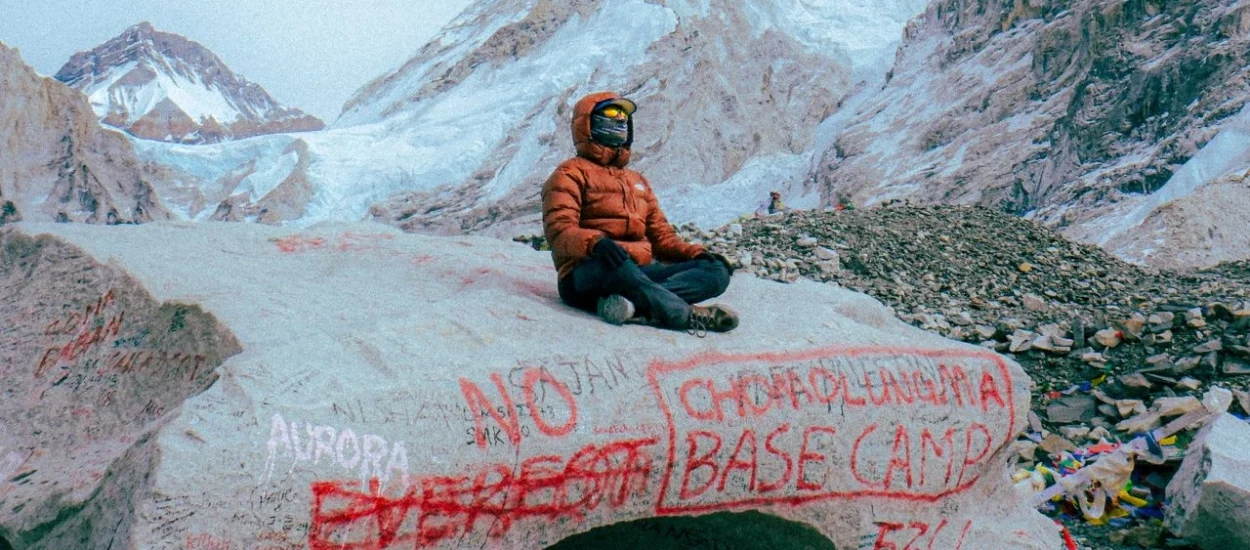
The Everest Base Camp Trek via Gokyo Lake is an alternative path through Nepal’s Khumbu region that trades some of the crowds of the classic trail for solitude, glacial lakes, and a genuine high-mountain pass crossing. Trekkers who want quieter trails and a deeper wilderness feel often choose this route over the standard Everest Base Camp itinerary.
Typically completed in 16 to 18 days, the journey combines the must-see landmarks of the traditional route with a detour into the Gokyo Valley. Our itinerary builds in acclimatization days at key elevations, which keeps the pace manageable even at extreme altitude. Previous trekking experience is a real advantage here, since altitude sickness remains the biggest obstacle to a successful summit push at Kala Patthar and Base Camp itself.
Crossing the Cho La Pass makes this version of the trek noticeably more adventurous, guiding hikers along quiet, high-altitude trails before reconnecting with the main Everest trail. From the summit of Kala Patthar and the approach to Base Camp, trekkers get an up-close, unobstructed view of Everest and its neighboring giants.
The adventure begins in Kathmandu with a flight into Lukla, followed by a walk of roughly four hours to Phakding. From Namche Bazaar onward, the route threads through Tengboche, Dingboche, Chukung, and Lobuche before tackling the Cho La Pass at 5,367 meters. The trek wraps up back in Lukla with a return flight to Kathmandu, completing one of the most peaceful ways to experience Everest Base Camp.
Spanning 18 days, the Everest Base Camp trek via Gokyo Lake ranks among the more demanding treks in the Khumbu, primarily because of the Cho La Pass crossing. Solid physical and mental preparation goes a long way toward a smooth journey.
This trek suits trekkers who are:
Few flights combine scenery and adrenaline quite like the hop from Kathmandu to Lukla. From the window, the Kathmandu Valley, winding rivers, terraced hillsides, and distant snow peaks unfold beneath the plane — an unforgettable start to the adventure.
Sitting at 3,440 meters (11,286 feet), Namche Bazaar is the beating heart of the Everest region. Trekkers can browse shops, cafes, bakeries, and lodges, blending modern comforts with deep-rooted Sherpa tradition. Namche also delivers striking views of Kongde Ri and Thamserku.
Beyond the busier trekking hubs, Dole and Machhermo offer a slower, more rural side of the Khumbu. Set among terraced slopes beneath towering peaks, these small settlements are ideal for trekkers seeking genuine stillness and a closer look at traditional Himalayan life.

The Gokyo Valley is a trekker favorite thanks to its dramatic scenery and string of high-altitude lakes. The Gokyo Lakes mirror the surrounding snow peaks in brilliant turquoise, creating some of the most photographed scenery in the Khumbu. From Gokyo Ri, at 5,357 meters, hikers get panoramic views of four 8,000-meter giants: Everest, Cho Oyu, Lhotse, and Makalu.
Crossing the Cho La Pass is the trek’s biggest physical test — and its biggest thrill. Expect a steep, rocky trail with sections of exposed ice, all set against a backdrop of dramatic peaks. Reaching the top, with pristine glaciers stretching in every direction, is a defining moment for any serious trekker.
No trip through the Khumbu is complete without standing at Everest Base Camp, the 5,364-meter (17,598-foot) staging ground for Everest summit expeditions. Surrounded by icefalls, glaciers, and towering rock walls, this spot is as much an emotional milestone as a physical one for trekkers from around the world.
At 5,545 meters (18,192 feet), Kala Patthar is widely regarded as the best vantage point for close-up views of Everest, Nuptse, and Pumori. Watching sunrise or sunset paint the peaks gold from this ridge is a highlight many trekkers rank above Base Camp itself.
Perched at 3,867 meters, Tengboche Monastery is the largest and most significant monastery in the Khumbu, framed by peaks like Ama Dablam. Visitors can watch monks at prayer or simply take in the peaceful mountain setting — a must for anyone interested in Sherpa culture and Himalayan Buddhism.
From rhododendron forests to alpine desert and glacial moraine, the trail delivers constantly changing scenery, along with waterfalls, suspension bridges, and dramatic cliffside paths. Along the way, trekkers meet Sherpa communities renowned for their mountaineering skill and warm hospitality — encounters that often become the most memorable part of the trip.
After landing in Nepal and completing visa formalities, our team will greet you at the airport and transfer you by private vehicle to your Kathmandu hotel. You’ll have time to rest and explore Thamel, the city’s lively tourist district, before flying to Lukla.
On departure day, our staff will pick you up early for the drive to the domestic terminal and your flight to Lukla. A porter will be waiting on arrival to support you throughout the trek. Meals and teahouse lodging are arranged each night, with a guide accompanying you the entire way.
Each trekking day starts after breakfast, following the route laid out in your itinerary, with a meal break built into the day’s hike. Once the trek concludes, you’ll fly back to Kathmandu, where our team will transfer you to your hotel. A sightseeing day in the city follows before your final departure home.
Over these 18 days, you can expect:
Booking with All Himalayan Treks is straightforward:
For bookings and inquiries, call +977-9854043523 or email econepaltrekkers@gmail.com.
While 2027 might feel far off, booking early has real advantages. Locking in your trip now secures 2026 pricing, protecting you against future cost increases. Early booking also gives you more time to research the route, understand its demands, and train properly — all of which build confidence and make the actual trek easier to handle.
This 18-day trek sits at the harder end of the difficulty scale for the Everest region, requiring a solid baseline of physical fitness. The high point of the trip is Cho La Pass at 5,420 meters, where thin air and rough terrain combine to make the going tough.
Extended time at altitude — roughly three weeks in the mountains with simple food and lodging — can be demanding for first-time trekkers. A well-paced itinerary with sufficient acclimatization days is essential; skipping this step is one of the most common reasons treks fall apart. Trekking with an experienced local agency, following a structured acclimatization plan, and training beforehand all make a significant difference.
Day 01: Arrival in Kathmandu (1,350 m / 4,429 ft)
Day 02: Fly Kathmandu–Lukla (2,850 m / 9,350 ft), 35 min; trek to Phakding (2,651 m / 8,698 ft), 3–4 hrs
Day 03: Trek Phakding to Namche Bazaar (3,440 m / 11,286 ft), 5–6 hrs
Day 04: Acclimatization day in Namche
Day 05: Trek Namche to Tengboche (3,860 m / 12,664 ft), 5–6 hrs
Day 06: Trek Tengboche to Dingboche (4,410 m), 4–5 hrs
Day 07: Acclimatization day in Dingboche
Day 08: Trek Dingboche to Lobuche (4,900 m / 16,076 ft), 4–5 hrs
Day 09: Trek Lobuche to Everest Base Camp (5,364 m / 17,598 ft); return to Gorak Shep (5,160 m / 16,929 ft), 8–9 hrs
Day 10: Sunrise hike to Kala Patthar (5,550 m / 18,209 ft); descend to Dzongla (4,843 m / 15,889 ft), 7 hrs
Day 11: Cross Cho La Pass to Thangnak (5,367 m / 17,608 ft), 6–7 hrs
Day 12: Trek Thangnak to Gokyo (4,800 m / 15,748 ft), 5 hrs
Day 13: Trek Gokyo to Dole (4,110 m / 13,484 ft), 5 hrs
Day 14: Trek Dole to Namche (3,440 m / 11,286 ft), 5 hrs
Day 15: Trek Namche to Lukla (2,850 m / 9,350 ft), 5–6 hrs
Day 16: Fly Lukla–Kathmandu (1,350 m / 4,429 ft), 35–40 min
Day 17: Sightseeing in Kathmandu
Day 18: Final departure
Choosing the right season makes a real difference in comfort, safety, and visibility on this route. Here’s what to expect throughout the year.
Spring (March to May) — Peak Trekking Season
Spring is widely considered one of the best windows for this trek, thanks to stable weather and clear mountain views. As Nepal’s main trekking season, expect busier trails and teahouses.
Autumn (September to November) — Another Prime Season
Autumn is a favorite among trekkers heading to EBC via Gokyo Lake, with mild temperatures, crystal-clear skies, and the added bonus of Nepal’s major festival season.
Winter (December to February) and Monsoon (June to August) — Off-Season Trekking
Both winter and monsoon bring more difficult, less predictable conditions, and most trekking companies see far fewer bookings during these months.
Trekking during these off-season windows is best suited to experienced high-altitude trekkers who are prepared for extreme cold or heavy rain and reduced visibility. First-time trekkers are generally advised to plan their Everest Base Camp via Gokyo Lake trek for spring or autumn instead.
Related Read: Everest Base Camp Trek 15 Days
Trekking this route requires two permits: the Sagarmatha National Park Entry Permit and the Khumbu Pasang Lhamu Rural Municipality Entrance Permit.
The Sagarmatha National Park permit can be obtained from the Nepal Tourism Board office in Kathmandu or at the entry checkpoint in Monjo — it is not issued in Lukla itself.
| Permit | Cost |
| Sagarmatha National Park Entry Permit | Foreigners: NPR 3,000 (+13% VAT); SAARC nationals: NPR 1,500 (+13% VAT); Nepalese: NPR 100 (+13% VAT) |
| Khumbu Pasang Lhamu Rural Municipality Entrance Permit | NPR 3,000 per person (VAT not applicable) |
Related Read: Everest Base Camp Trek Permits Guide
Travel insurance isn’t mandatory, but it’s strongly recommended for this trek. The route travels through remote, high-altitude terrain where emergencies can escalate quickly, and evacuation options are limited.
Insurance that covers emergency helicopter evacuation and medical treatment isn’t just a formality — it can be the difference-maker if something goes wrong at altitude.
Altitude sickness is a real risk on any high-elevation trek in the Khumbu, so understanding its symptoms and prevention is essential before you go.
Left untreated, acute mountain sickness (AMS) can progress into more serious conditions like HAPE (high-altitude pulmonary edema) or HACE (high-altitude cerebral edema), both of which can be life-threatening.
Early symptoms of AMS:
Prevention strategies:
Related Read: Altitude Sickness on the Everest Base Camp Trek: Prevention Tips
The Everest Base Camp trek via Gokyo Lake is considerably tougher than the standard EBC route. Knowing what to expect helps you prepare and tackle each obstacle with confidence.
Long trekking days: Expect to walk 5–7 hours daily across rugged terrain for roughly three weeks. Building stamina — especially leg and shoulder strength — well before departure makes a real difference.
Cho La Pass: At 5,420 meters, this high mountain pass is one of the trek’s toughest sections, demanding both physical endurance and careful altitude management.
Unpredictable weather: High-altitude conditions can shift quickly between intense sun, rain, and snowfall, with sudden temperature drops. Preparing for variable weather is essential, particularly above 4,000 meters.
Basic facilities: Accommodation at altitude is simple — no heated floors or air conditioning, and dining options are limited to basic teahouse fare. Medical facilities are minimal to nonexistent at higher elevations, so trekkers should be ready to spend nearly three weeks with limited amenities.
Physical and mental demands: Three weeks of trekking through demanding terrain requires solid fitness and mental resilience. Fatigue, frustration, and homesickness are common, especially in the trek’s more remote stretches.
Proper preparation goes a long way toward a safe, enjoyable Everest Base Camp via Gokyo Lake experience.
Start training at least three months before your trek:
Related Read: Nepal Trekking Packing List
The standard 18-day itinerary suits most reasonably fit trekkers, but it can be extended for a more relaxed pace. Choose whichever version matches your fitness level, as long as it includes proper acclimatization days.
While your trekking agency handles logistics in Nepal, you’ll need to arrange your passport and visa, travel insurance, international flights, and your Kathmandu–Lukla round-trip flight.
Review exactly what’s included in your package before booking, and set aside a separate budget for extras — snacks, drinks, showers, Wi-Fi, and tips.
Trading a few words in Nepali with locals along the trail adds a memorable, personal touch to the journey. Here are some useful phrases to pick up before or during your trek.
Greetings and Politeness
Getting Around
Food and Dining
Everyday Phrases
Related Read: How to Prepare for the Everest Base Camp Trek
A good guide and porter can make or break your Everest Base Camp via Gokyo Lake experience. Your guide brings local expertise and cultural insight, while your porter carries your load so you can focus on the trail.
Beyond the practical support, guides and porters often become a steady source of encouragement during tough stretches of the trek. Always confirm your guide holds a government trekking license and that porters are properly equipped and physically prepared for the route.
Related Read: Hiring a Guide and Porter for the Everest Base Camp Trek
Solo trekking is possible on this route provided you have your Sagarmatha and Pasang Lhamu permits, and you’re both physically and mentally prepared for the challenge.
Following incidents involving missing foreign trekkers, Nepal introduced regulations requiring a licensed trekking guide for all trekkers. Enforcement varies locally, so solo trekking on routes like this one, Annapurna Circuit, or Langtang remains possible in practice — but it carries real risk, especially for inexperienced trekkers. Hiring a guide and porter is strongly recommended for anyone new to high-altitude trekking.
If your schedule allows, Nepal offers plenty of ways to fill extra time after completing the EBC via Gokyo Lake trek — from cultural tours and jungle safaris to adventure activities in Pokhara like paragliding, bungee jumping, and white-water rafting.
All Himalayan Treks can help you plan any add-on activities or destinations that match your interests.
As Nepal’s premier trekking destination, the Everest region does offer ATMs, card payments, and online banking in larger villages like Namche Bazaar. Higher up the trail, however, these services disappear entirely.
Carrying enough Nepalese rupees (NPR) — the national currency — is essential. Currency exchange is easy to arrange in Kathmandu before you depart for the mountains.
Most trekkers reach the Khumbu via a short flight to Lukla, though an overland route through Jiri also exists. The flight from Tribhuvan International Airport takes roughly 30 minutes.
During peak trekking seasons, flights are often rerouted through Ramechhap’s Manthali Airport instead of Kathmandu, requiring a road transfer by bus or private vehicle to reach the departure point.
Flights to Lukla are highly weather-dependent, and delays or cancellations are common. Building extra buffer days into your schedule is a smart precaution.
Flight costs (not included in the trek package, though we assist with booking):
Note: Fares change frequently — check current pricing directly with the airline. Tara Air, Summit Air, and Sita Air are the main carriers operating regular Lukla flights.
Related Read: Kathmandu to Lukla and Ramechhap to Lukla Flights: Complete Guide
Every trekker on this 18-day journey is paired with an experienced, licensed guide. Larger groups receive additional assistant guides as needed.
Solo trekkers who prefer to hire just a guide (without a full group) are welcome to do so with us. A complimentary porter service is also included, with one porter shared between two trekkers, each carrying up to 20 kg.
Deep Himalayan Experience With years of experience running the Everest Base Camp via Gokyo Lake route, our team knows how to plan a trip that’s safe, well-organized, and genuinely memorable.
Safety First Your safety is our top priority throughout the trek, backed by experienced guides and dependable porters at every stage of the journey.
Responsible, Eco-Friendly Trekking We follow sustainable trekking practices and a strict “leave no trace” ethic to minimize our footprint on the mountains we love.
Licensed, Experienced Guides Our guides and assistant guides are fully licensed and trained for high-altitude trekking, with extensive experience leading international trekkers. They’re equipped to handle emergencies quickly and add real depth to your trip through their knowledge of local culture, wildlife, and landscapes.
Flexible, Personalized Itineraries Every trekker moves at their own pace. We work with you to shape an itinerary that fits your fitness level and comfort while keeping the adventure intact.
Reliable Support Throughout From pre-trip planning to daily support on the trail, we handle permits, food, lodging, transport, and logistics so you can focus on the experience.
A Journey Worth Remembering Trekking with our team means more than reaching Base Camp — it’s the shared laughter, local stories, and genuine company of your guide and porter that make the mountains feel like a second home.
Your trek begins the moment you land at Tribhuvan International Airport in Kathmandu, where our team will meet you and transfer you to your hotel in Thamel. Known as the city’s trekking hub, Thamel is packed with gear shops, restaurants, and everything you might still need before hitting the trail. Spend the afternoon wandering its narrow lanes and sampling local dishes, then settle in for a traditional Nepali dinner of dal bhat — rice, lentils, and vegetables — before an early night at the hotel.
An early-morning mountain flight carries you to Lukla in about 35 minutes, with aerial views of Himalayan peaks along the way. From Lukla, the trek officially begins with a 3–4 hour walk along the Dudh Koshi River to Phakding, a Sherpa village nestled in the valley. The trail winds through forested hillsides and small ethnic settlements before reaching your teahouse for the night.
After breakfast, the trail climbs toward Namche Bazaar, the traditional gateway to Everest. Along the way, you’ll cross several suspension bridges strung with Buddhist prayer flags, including the well-known Hillary Bridge, before entering Sagarmatha National Park near Monjo. By late afternoon you’ll reach Namche, where dinner and an overnight stay await.
A rest day in Namche is essential before pushing to higher elevations. Spend the morning exploring the bustling Saturday market and the Sherpa Culture Museum. Acclimatization days like this one are key to preventing altitude sickness as the trek climbs steadily higher over the coming days.
Today’s 5–6 hour walk to Tengboche passes through pine forest and a river crossing at the Dudh Koshi. Once in Tengboche, you can visit the famous monastery and take in close-up views of Everest, Lhotse, and Ama Dablam before an overnight stay in a local teahouse.
The trail descends into the Imja Valley before climbing again toward Dingboche, roughly a 4–5 hour walk, with fine views of Ama Dablam and neighboring peaks throughout. This stretch also passes near Pangboche Gompa, one of the oldest monasteries in the Khumbu. After a short exploration of Dingboche village, settle in for dinner and rest at your teahouse.
A second acclimatization stop, this time in Dingboche, with the peaks of Ama Dablam and the Nangkartshang ridge as your backdrop. A side hike up to Nangkartshang Peak offers views of Lhotse, Makalu, and Island Peak, and helps your body continue adjusting to the thinning air before you climb further.
Today’s 4–5 hour trek to Lobuche delivers some of the trip’s best mountain views, with Pumori and Nuptse dominating the skyline. After a demanding walk across increasingly rugged terrain, you’ll arrive in Lobuche for the night, with Everest Base Camp now just a day away.
The day trekkers train for: a walk alongside the Khumbu Glacier leads to Everest Base Camp itself, at 5,364 meters. From here, the views take in Everest (8,848 m), Nuptse (7,861 m), Pumori (7,161 m), and Khumbutse (6,636 m) — a moment worth savoring and photographing. After time at Base Camp, you’ll retrace your steps to Gorak Shep for dinner and an overnight stay.
A pre-dawn start sets you up for the steep climb to Kala Patthar, the trek’s premier viewpoint for Everest, Nuptse, Lhotse, and Ama Dablam. Watching sunrise light up the peaks from here is one of the trek’s defining moments. After breakfast back in Gorak Shep, the trail continues on to Dzongla.
The most demanding day of the trek: a 6–7 hour crossing of Cho La Pass, which tops out around 5,420 meters, with views of Cho Oyu and surrounding peaks along the way. After the pass, the trail descends to Thangnak for a well-earned dinner and rest.
A roughly 5-hour walk brings you to Gokyo, passing the Ngozumpa Glacier — the longest glacier in the Himalayas — with Cho Oyu, the world’s sixth-highest peak, visible in the distance. Along the way, you’ll pass several of the turquoise Gokyo Lakes before settling into your lodge for the night.
Roughly 15 kilometers of trail lead back down to Dole, a small village in the Dudh Koshi valley with Khumjung to the north and Machhermo to the south. The descent offers continued views back over the Gokyo Valley.
The trail drops through rhododendron forest back toward Namche, with mountain and valley views throughout. Following the Dudh Koshi and Imja Khola rivers and passing several chortens and bridges, you’ll arrive back in the lively town of Namche for dinner and an overnight stay.
Retracing familiar trail, the final trekking day brings you back to Lukla in 5–6 hours, with the same striking mountain scenery from a new perspective. This is your last night in the Khumbu, so it’s a good time to pick up any last souvenirs or gear.
An early flight returns you to Kathmandu, where you can rest after two weeks on the trail. Our team will transfer you from the domestic terminal back to your hotel in Thamel, leaving the rest of the day free to relax or explore before dinner.
A full day of cultural exploration awaits, taking in Swayambhunath Stupa (the “Monkey Temple”), the sacred Boudhanath Stupa — a major hub for the city’s Tibetan Buddhist community — and Pashupatinath Temple, one of the largest Hindu temple complexes in South Asia. After a day among Kathmandu’s UNESCO World Heritage Sites, return to your hotel for a final night in Nepal.
Your Everest Base Camp via Gokyo Lake trek comes to a close today. Our team will transfer you to Tribhuvan International Airport in time for your onward flight, wrapping up an unforgettable journey through the Khumbu. We’d love to welcome you back for future adventures elsewhere in Nepal.
Lodging on this route shifts as you climb. At lower elevations, you’ll typically stay in guesthouses or lodges, some offering private rooms with attached bathrooms. Higher up, accommodation switches to classic mountain teahouses.
Teahouse rooms are simple and cozy, usually twin-bedded, with shared bathroom facilities. Most are family-run, offering both lodging and a communal dining area where trekkers gather each evening — a great window into Himalayan mountain culture as well as a place to sleep.
Teahouses grow more basic the higher you climb, though most still offer paid extras like hot showers and device charging, typically up to around NPR 1,000 per use.
Recommended teahouses along the route:
Meals along the Everest Base Camp via Gokyo Lake route are arranged through your teahouse and kept simple, made mostly from local ingredients. Expect a mix of traditional Nepali dishes, Sherpa specialties, and a handful of international options — though seafood is off the menu at this altitude. Lunch is typically served along the trail, while breakfast and dinner are eaten at your teahouse.
Typical trekking menu:
| Meal | Common Options |
| Breakfast | Pancakes (plain, apple, or honey), toast with butter or jam, eggs (fried, boiled, or scrambled), porridge, Tibetan bread with honey or jam, oatmeal, muesli |
| Lunch | Dal bhat (lentils, rice, and vegetable curry), fried noodles or fried rice, momos (steamed dumplings), Sherpa stew (shyakpa), soup varieties, spaghetti or macaroni |
| Dinner | Dal bhat, Sherpa stew, vegetable curry with rice or roti, thukpa (Tibetan noodle soup), fried potatoes or rosti, pasta with light sauce, chapati with curry |
| Beverages | Black tea, milk tea, ginger tea, lemon tea, hot chocolate, instant coffee, ginger-honey tea, boiled water, herbal infusions (availability varies) |
Expect to pay roughly $1–3 for hot or cold drinks and $1–2 per liter for bottled water.
Most teahouses offer electricity and Wi-Fi, but neither is free — expect to pay roughly $2–5 per use for device charging or internet access.
You can cut down on these costs by carrying a reliable power bank and picking up a local SIM card. SIMs are available at the airport for around NPR 100, with data packages typically starting from NPR 500–1,000.
Emergency satellite phones are available on the trail but come at a steep price, so for everyday communication, a local SIM with roaming data is the more practical choice.
Staying hydrated is essential at altitude, and safe drinking water is available throughout the route. Bottled water can be purchased at local shops and teahouses, or you can refill a reusable bottle with boiled water from your lodge.
Bottled water costs roughly NPR 30–50 at lower elevations, climbing to as much as NPR 100 per liter higher up the trail. Tap or stream water can also be used if treated first with water purification tablets.
Packing the right gear makes a real difference on this high-altitude route. Here’s a complete checklist to help you get trek-ready.
This is a trekking route through Nepal’s Khumbu region that combines a visit to Everest Base Camp with a detour to the stunning Gokyo Lake, sitting at roughly 4,700–5,000 meters (15,400–16,400 ft).
Unlike the classic EBC trek, which heads straight to Base Camp, this version also takes in the Gokyo Valley and its glacial lakes, and requires crossing the demanding Cho La Pass at 5,420 meters (17,782 ft) — making it longer and more challenging overall.
Expect views of Everest, Lhotse, Makalu, Cho Oyu, Nuptse, Pumori, and Ama Dablam, among other Himalayan giants.
Around 18 days, though the exact length can vary depending on your chosen itinerary, route, and sightseeing preferences.
Spring (mid-March to May) and autumn (September to early November) offer the clearest skies, most stable weather, and best mountain visibility for this trek.
Yes, with proper preparation — beginners should be able to comfortably walk 5–6 hours a day at altitude and be mentally ready for the trek’s demands. That said, this route is generally better suited to those with some prior trekking experience rather than absolute first-timers.
Roughly 112 km (70 miles) excluding side trips, or about 121 km (75 miles) including optional excursions to Gokyo Ri and Hotel Everest View.
Yes — opting for a helicopter return from Base Camp can significantly shorten the overall trip length.
Key waypoints include Namche Bazaar, Dole, Lukla, Gokyo, and Gorak Shep.
Yes, crossing Cho La Pass is a core part of the 18-day itinerary.
Yes — the itinerary includes dedicated rest and acclimatization days in Namche Bazaar and Dingboche to help your body adjust safely.
Absolutely. All Himalayan Treks can help design a personalized itinerary that still includes proper acclimatization.
No, airfare is not included in the package cost, but our team can assist with booking your tickets.
The trek begins and ends in Kathmandu, bookended by scenic flights to and from Lukla.
Yes — visiting the Gokyo Valley and its lakes, at roughly 4,700–5,000 meters, is a central part of the itinerary, with an overnight teahouse stay near the lake.
Yes, the itinerary includes a visit to Kala Patthar for close-up Everest views.
5,364 meters (17,598 ft) above sea level.
Approximately 5,545 meters (18,192 ft).
5,420 meters (17,782 ft).
The trek’s high point is Cho La Pass, at 5,420 meters (17,782 ft).
Between 4,700 and 5,000 meters (15,400–16,400 ft).
It’s generally classified as moderate to challenging.
A private vehicle takes you to the airport, followed by a domestic flight to Lukla, the trek’s starting point.
It’s a challenging trek requiring solid fitness, with daily walks of 5–7 hours at altitude over roughly three weeks.
Not ideally — first-time trekkers are better suited to the standard EBC route or an easier trail before attempting this one.
Lower-altitude teahouses offer a wider variety, while options narrow at higher elevations. Expect dal bhat, Sherpa stew, Tibetan bread, and international dishes like pasta, noodles, soup, pancakes, and eggs, along with a range of teas and coffee.
Cozy teahouse rooms with twin beds, blankets, and pillows — no heating or air conditioning — with shared bathrooms and communal dining areas.
Yes, with adequate fitness and mental preparation, though first-timers are generally steered toward an easier trek first.
A moderate to good level of fitness, capable of sustaining 5–7 hours of daily walking at altitude for around three weeks.
Focus on cardiovascular conditioning, strength training, and flexibility work in the months leading up to departure.
Beginners should start training 3–4 months out; experienced trekkers with existing fitness can prepare on a shorter timeline.
It helps, but isn’t strictly required — a good fitness base can substitute for experience if you’re new to trekking.
No official limit, though we recommend caution for children under 10 and adults over 70. Fitness and health matter more than age.
No vaccinations are mandatory for entry, but Hepatitis A, typhoid, Japanese encephalitis, rabies, polio, and MMR vaccines are commonly recommended.
Build up your fitness, avoid alcohol and smoking, stay hydrated, learn about altitude sickness, eat well, and get a pre-trek health checkup.
Only if you have an existing medical condition — in that case, a doctor can advise on medication and precautions specific to high altitude.
Yes — given the altitude, remoteness, and unpredictable weather involved, insurance covering emergency medical care and helicopter evacuation is strongly recommended.
Crossing Cho La Pass, where reduced oxygen at 5,420 meters increases physical strain and altitude sickness risk.
Your guide will assess your condition and decide on the right course of action — resting, descending, or arranging medical help if needed.
This particular trek is not recommended for those with no prior trekking background.
Yes, All Nepal Treks’ guides are experienced in recognizing and managing altitude-related issues on the trail.
The Khumbu Pasang Lhamu Rural Municipality Entry Permit and the Sagarmatha National Park Entry Permit.
We handle all permit arrangements as part of your booking, so there’s nothing extra for you to organize.
Yes, permit costs are built into the trek price. Entrance fees for post-trek sightseeing at UNESCO sites are separate.
Warm layered clothing, sturdy trekking boots, a good sleeping bag, essential electronics, and a first aid kit.
Aim to keep your daypack under 10 kg.
Teahouses provide blankets, but a proper sleeping bag adds extra warmth. A down jacket is essential given how cold high-altitude nights get.
Packages generally range from US$1,450 to US$3,000 per person, with most falling between US$1,800 and US$2,500, covering lodging, meals, permits, guides, porters, and transport.
Permits, ground transportation, guide and porter services, meals, accommodation, and trek logistics.
Yes — tips, beverages, bottled water, hot showers, device charging, and heritage site entrance fees are typically not included.
Around NPR 20,000 is generally enough to cover personal expenses and extras not included in the package.
Tipping is customary in Nepal’s trekking culture — the amount typically reflects your satisfaction with their service.
Weather is generally stable during spring and autumn, though mountain conditions can shift quickly, so it pays to be prepared for sudden changes.
Nighttime temperatures at higher elevations can drop well below freezing, so warm layers are essential.
Possibly, especially if trekking soon after winter, when higher elevations may still hold snow.
No — solo trekking isn’t recommended, and Nepal requires a licensed guide for safety reasons on routes like this one.
Coverage is generally reliable at lower elevations but becomes patchy or unavailable higher up.
Yes, most teahouses offer paid Wi-Fi access for a small additional fee.
Yes, emergency satellite phones are available through your guide, typically costing around $5 per minute.
Yes — a local SIM (NCELL or NTC) is an affordable way to stay connected, often available for as little as $1.
Yes, trekkers are welcome to bring gifts or make donations to communities along the route.
Greet people politely in the local language, dress modestly, show respect at monasteries and religious sites, avoid pointing with your finger, and ask permission before photographing locals or sacred spaces.
Guides are typically fluent in English; porters often have more limited English due to less formal education.
Safe drinking water is available for purchase at teahouses and small shops along the entire route.
Around 30 to 35 minutes.
Nepal’s Civil Aviation Authority reroutes flights through Ramechhap’s Manthali Airport during peak season to manage air traffic congestion.
Yes, Ramechhap has adequate hotels, restaurants, and lodges for trekkers waiting on a Lukla flight.
Local buses cost around $10–12 per person and depart from Gongabu bus station around 6 AM.
Yes, tourist buses depart from Keshar Mahal, typically around 1:30 AM.
Yes — Sherpa porters, known worldwide for their strength and endurance at altitude, are available for this 18-day route.
Everest (8,848m), Lhotse (8,516m), Makalu (8,485m), Cho Oyu (8,188m), Ama Dablam (6,812m), Nuptse (7,861m), Thamserku (6,623m), Kangtega (6,782m), Pumori (7,161m), and Taboche (6,495m).
About 20 minutes, covering roughly 73 kilometers.
Start early to avoid afternoon winds, wear comfortable, broken-in boots, keep your pack light, stay hydrated, pace yourself, follow your guide’s lead, and take a moment to appreciate the glacial scenery along the way.
The sight of prayer flags fluttering above Sherpa villages and mountain passes — a small but memorable detail that adds a sense of spiritual atmosphere to the journey.
Yes — teahouses are natural gathering spots where trekkers heading to Everest Base Camp and beyond swap stories, share meals, and often become fast friends over the course of the trek.


With 10+ years of expertise in Nepal, Tibet, and Bhutan, Binaya is the right person to help you create a trip you’ll never forget.