

The Langtang Valley Trek – 8 Days is a moderately challenging trek in the Langtang region of Nepal, offering stunning Himalayan scenery, rich Tamang culture, lush forests, and glacier views. This trek is ideal for those looking for a shorter Himalayan adventure while experiencing authentic mountain life.
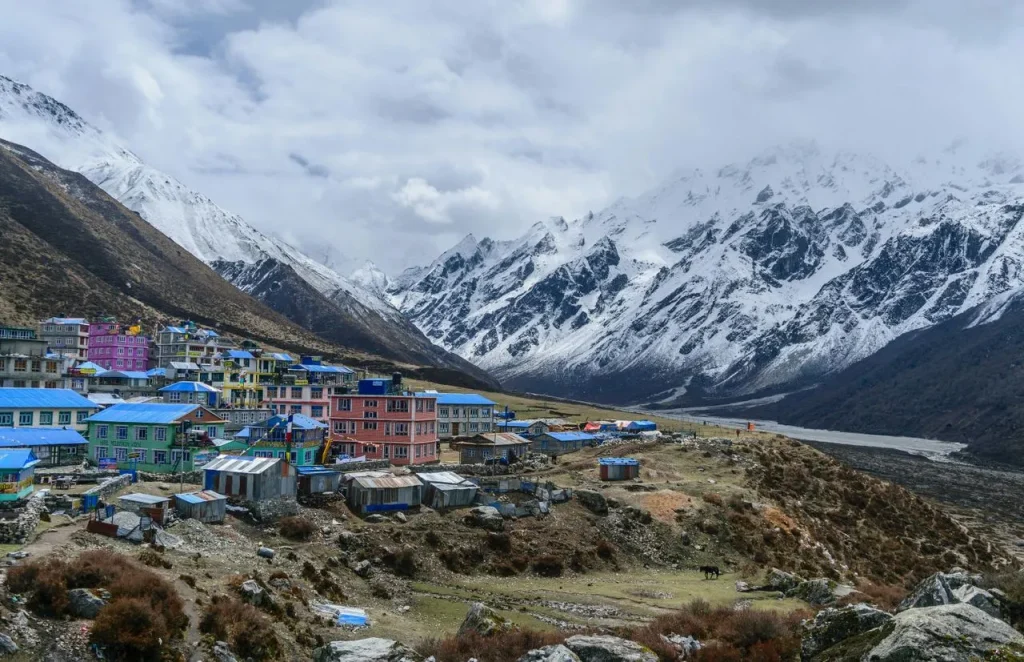
Spring (March – May)
Spring is one of the most popular seasons for trekking in Langtang. During this time, temperatures are moderate, making trekking comfortable. The forests and hillsides come alive with vibrant colors as rhododendrons, magnolias, and other wildflowers bloom. Snow begins to melt at lower altitudes, opening trails that are safer and easier to navigate. Mountain views, including Langtang Lirung and other peaks, are often clear, especially in late April and May. Trekkers also enjoy longer daylight hours, which allow for more flexible trekking schedules.
Autumn (September – November)
Autumn is considered the best overall season for Langtang trekking. After the monsoon, the air is clean and crisp, offering the clearest views of the Himalayas. Temperatures are mild, forests are vibrant, and rhododendrons may still bloom in early September. This season is ideal for photography, cultural experiences in local villages, and enjoying long, sunny trekking days. Popular trekking routes can be busier, so booking accommodation in advance is recommended.
Day 1: Kathmandu to Syabrubesi (Drive ~6–7 hours)
Day 2: Syabrubesi to Lama Hotel (~5–6 hours)
Day 3: Lama Hotel to Langtang Village (~5 hours)
Day 4: Langtang to Kyanjin Gompa (~3–4 hours)
Day 5: Explore Kyanjin Gompa
Day 6: Kyanjin Gompa to Lama Hotel (~5–6 hours)
Day 7: Lama Hotel to Syabrubesi (~5–6 hours)
Day 8: Syabrubesi to Kathmandu (~6–7 hours drive)
Getting to the Langtang Valley Trek starting point is straightforward: a 7 or 8-hour bus journey from Kathmandu.
That’s not to say it’s dull far from it! Driving along the Trisuli River, you may be fortunate to see whitewater rafters taking on the mighty rapids. But look up already, the mountains are welcoming you. On reaching Trisuli Bazaar, the Manaslu Massif, Ganesh, Jungal Himal, and Langtang stand tall overhead.
The road is a bit bumpy from this point, so be prepared. It’s around 50 km / 31 miles to Dhunche, then another 15 km / 9 miles to Syabrubesi, where we stop for the night before beginning the trek proper the following day.
Another walk through a beautiful forest with Langtang Lirung as the backdrop. When we reach Ghora Tabela, the trail enters green meadows, and we can see the Langtang Range stretching on both sides of the valley. Walking on, the valley widens, and we can see herders graze their livestock on the high summer pastures.
Today, there are only temporary settlements and an army post. This was once the teaming village of Langtang, with its many trekkers’ tea houses. Today the area is full of boulders, deprived of life after the 2015 earthquake.
Walking for half an hour or so, we reach the village of Mundu. Our overnight stop at Mundu is very comfortable, with its more modern buildings and facilities.
You will pass through the forest and reach Ghoretable after a 3-hour hike. Ghoretable is a horse stable. The trek continues, and you will reach Langtang Village.
The 2015 earthquake destroyed Langtang village, but it has since been rebuilt. You can stay in Langtang Village or Mundu, which is the next stop from Langtang Village. You will see glorious views of Langtang and Gonchompe.
The Langtang village thrives with a community health post, government schools, small markets, and monasteries.
The route is shorter today, and it is lined with Buddhist artifacts, such as Chortens, prayer flags, and rocks with Buddhist inscriptions carved into them.
Watermills and yak pastures are also interesting, as are the wonderful mountain views. Reaching Kyanjin Gompa by lunchtime allows one to relax or explore the area.
Why not hike towards Langshisha Kharka, which has wonderful views? We overnight in the Gompa and enjoy the area’s spirituality and mountains.
Here, you’ll find a range of accommodations, including guesthouses and lodges, and have the opportunity to explore the local gompa (monastery) and enjoy the stunning views of the surrounding peaks like Langtang Lirung.
This is an exciting but challenging day to hike up Tsergo Ri (4,980m /16,338 ft), from where we can see over 20 peaks, the Langtang Valley, and frozen lakes.
The views and exhilarating experience make this hard upward hike well worthwhile! After taking in the breathtaking views, return to Kyanjin Gompa for a second night and a well-deserved dinner.
Today we begin our descent from the alpine zone of Kyanjin Gompa, nestled beneath Langtang Lirung, back toward the lush green forests and river valleys of the lower Langtang region. Though you’re retracing your steps, the journey feels entirely new, this time with sweeping downhill views of the entire valley, snowcapped peaks to your back, and a stronger sense of connection to the trail.
The walk descends steadily through pastures, glacial streams, and forests thick with pine, oak, and rhododendron. Along the way, we pass familiar villages such as Langtang Village, Thyangsyap, and Ghodatabela, where we can pause for short rests or a lunch stop.
Though the trail is less physically demanding than the ascent, the long downhill sections can be tough on the knees, so trekking poles and careful footing are essential.
By late afternoon, we reach Lama Hotel, a quiet forested village located beside the Langtang Khola. The warmer air, lower altitude, and soft river sounds make this a restful stop after a rewarding day.
Today marks the final day on the Langtang trail, as we descend from the quiet forested setting of Lama Hotel back to the vibrant riverside village of Syabrubesi. Although it’s a descent, the trail can still be steep and uneven, especially through the forest sections, so take your time and use trekking poles for stability.
The path winds through familiar terrain, rhododendron, oak, and bamboo forests, cascading waterfalls, and steep gorges carved by the Langtang Khola. You’ll pass small hamlets and occasional tea shops, offering opportunities for breaks and reflection on your journey.
As you approach Syabrubesi, the landscape opens up into terraced fields and warm mid-hill villages, and the air grows noticeably thicker and warmer. After days in the highlands, returning to Syabrubesi feels like a gentle return to civilization.
Today, we leave the peaceful hills of Syabrubesi behind and drive back to Kathmandu, completing the full circle of your Langtang adventure. The scenic drive winds through the hills of Rasuwa and Nuwakot, passing terraced fields, rivers, and small towns along the Trishuli River.
Although the road is rugged and winding at times, it offers one last opportunity to enjoy Nepal’s diverse landscapes, from misty hills to bustling bazaars. As you approach the Kathmandu Valley, the sights and sounds of city life slowly return.
Expect a few breaks along the way for snacks, bathroom stops, and lunch.
The trek is moderate. It involves 4–6 hours of trekking per day on uneven trails with some gradual ascents. No technical climbing skills are required.
The trek is 8 days in total, including drive from and back to Kathmandu.
Guide: Recommended, especially for first-time trekkers, to navigate trails and provide cultural insights

With 10+ years of expertise in Nepal, Tibet, and Bhutan, Binaya is the right person to help you create a trip you’ll never forget.